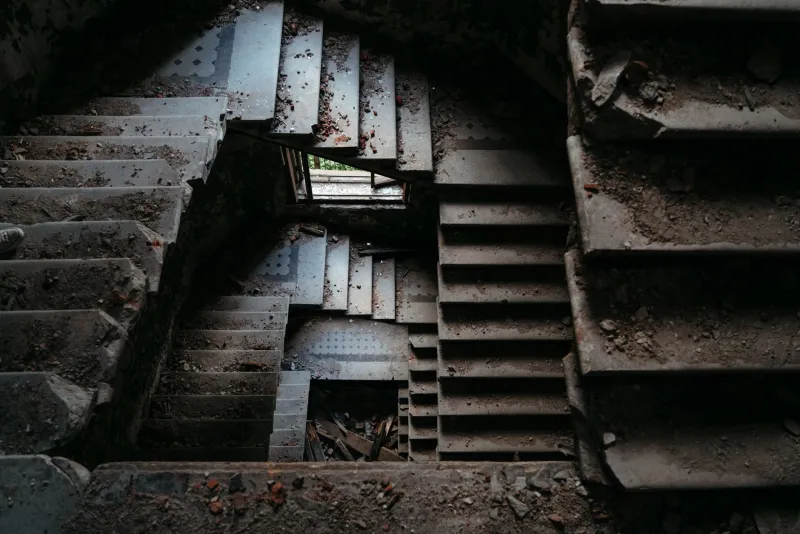
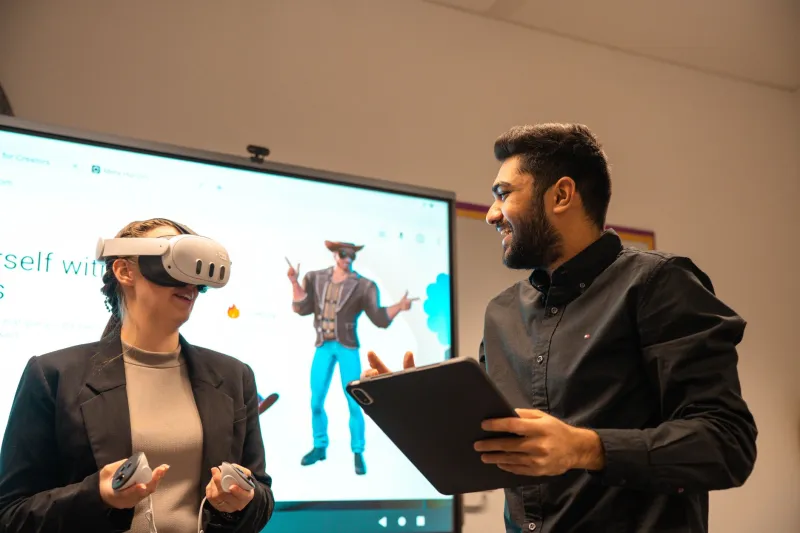
Gone Without a Goodbye: The Silent Erasure of Your Digital Life

Imagine spending three years building something. Not a house, not a business — but a life. A community of friends you'd log into every evening, a virtual home you'd spent hundreds of hours decorating, a social history rich with inside jokes, shared milestones, and memories that felt just as real as anything that happened offline. Now imagine waking up one morning to a form email telling you the servers are shutting down in 30 days.
That's not a hypothetical. For millions of Americans who've invested deeply in virtual worlds, it's already happened. And as the metaverse expands, the stakes of digital impermanence are getting harder to ignore.
The Grief Nobody Talks About
When Second Life competitor There.com went dark in 2010 — and again when it briefly relaunched only to stumble — users described something that sounded a lot like mourning. Not for pixels, but for the relationships and rituals those pixels represented. More recently, the slow wind-downs of platforms like VRChat communities and niche metaverse spaces have left users scrambling to screenshot, export, and archive whatever fragments they can before the lights go out for good.
Jamie, a 34-year-old graphic designer from Portland who asked us to use only her first name, spent four years deeply embedded in an online world that shuttered last year. "I had friendships in there I'd maintained longer than some of my real-life relationships," she told MetaVibe Zone. "When it closed, I lost the context for all of it. The inside jokes, the shared spaces — none of it translates outside the platform. It's like someone burned down the town where you grew up."
That emotional weight is real, and psychologists are starting to pay attention. Digital spaces create what researchers call place attachment — the same psychological bond humans form with physical locations. When those spaces disappear without warning, the loss can feel disproportionately large to people who've never experienced it themselves.
The Business Model Built on Forgetting
Here's the uncomfortable truth: most virtual platforms aren't designed with longevity in mind. They're built to grow fast, monetize hard, and pivot when the numbers stop working. Your memories are a side effect of someone else's product roadmap.
When a company decides to sunset a platform, user data — including years of social graphs, item inventories, and communication histories — typically gets wiped. Terms of service that most users never read spell this out clearly: you don't own your digital possessions, your avatar's history, or even your friends list in any portable, permanent sense. You're a tenant in a building you thought was yours.
The economics make this almost inevitable. Running servers costs real money. A platform with declining engagement becomes a liability, not an asset. And unlike a physical business shutting down, there's no estate sale, no way to retrieve what you left inside.
"The whole architecture of these platforms is optimized for engagement, not preservation," says Marcus Webb, a digital archivist based in Austin who's spent the last five years documenting virtual worlds before they disappear. "Nobody's incentivized to build for the long term because the long term doesn't pay quarterly dividends."
The Archivists Racing the Clock
Webb is part of a loose, passionate community of digital preservationists who treat dying virtual worlds the way traditional archivists treat crumbling manuscripts. Using tools ranging from custom screen-capture rigs to reverse-engineered server emulators, they're building unauthorized but deeply earnest archives of spaces most people have already forgotten.
Projects like the Archive Team and various fan-run preservation efforts have managed to snapshot entire virtual environments before they go offline — capturing not just the visual geometry of these spaces but chat logs, event histories, and the social texture that made them meaningful. It's painstaking, underfunded work, and it operates in a legal gray zone that makes institutional support nearly impossible to secure.
"We're doing this because someone has to," Webb says, with the resigned energy of someone who knows the odds. "These spaces are cultural artifacts. Fifty years from now, historians are going to want to understand how people lived online in the 2010s and 2020s. Right now, we're the only ones making sure that's possible."
Decentralization as a Lifeline
The tech world's proposed solution to digital impermanence is decentralization — moving away from platforms controlled by single companies and toward systems where user data lives on distributed networks that no one entity can simply switch off.
Blockchain-based virtual worlds like Decentraland and The Sandbox have made this pitch central to their identity: your assets live on the blockchain, not on a company's server, which means they theoretically persist even if the platform itself folds. It's a compelling argument, and for certain types of digital possessions — particularly NFT-based items — it holds up.
But critics point out the limits quickly. The blockchain might preserve proof of ownership, but it can't preserve the experience of a world that no longer has active servers. Owning a deed to a plot of virtual land means nothing if the world it exists in has gone dark. "Decentralization solves the asset problem, not the memory problem," notes Priya Nair, a developer working on open-source metaverse infrastructure. "Your item might survive. Your friendships, your history, your sense of place — those are much harder to port."
Nair's team is working on something more ambitious: open protocols that would allow virtual worlds to interoperate, letting users carry their social histories and identity layers between platforms the way you can take your email address from one provider to another. It's years away from being mainstream, but the vision is gaining traction in developer communities.
What We Lose When We Lose These Places
It's easy to be dismissive about grief over virtual spaces — to tell people to "just go outside" or remind them that none of it was ever really real. But that framing misses something important about how millions of Americans actually live their digital lives.
For people with disabilities, social anxiety, or geographic isolation, virtual worlds aren't a supplement to real life — they're a primary social infrastructure. For LGBTQ+ teens in unsupportive households, for neurodivergent adults who find in-person socialization exhausting, for anyone who's ever found their people somewhere they could only reach through a screen, these spaces carry genuine weight.
When they disappear, the loss isn't just sentimental. It's structural. Communities scatter. Support networks dissolve. The shared history that gave a group of people their identity together simply ceases to exist in any accessible form.
Jamie, the designer from Portland, put it plainly: "People keep telling me it wasn't real. But the friendships were real. The time I spent was real. The person I became in there — that was real too. The platform shutting down doesn't retroactively make any of that fake."
Building for the Long Game
The metaverse is still young enough that most of us haven't fully reckoned with its mortality. But the platforms being built today will eventually age out, pivot, or collapse — and the question of what survives that process is worth asking now, before the loss becomes irreversible.
Some developers are starting to build with preservation in mind, creating export tools, open data formats, and community-controlled archives as first-class features rather than afterthoughts. It's a cultural shift as much as a technical one — a recognition that the spaces where people build their digital lives deserve the same consideration we give to physical places worth protecting.
Until that becomes the norm, the best advice anyone can offer is frustratingly low-tech: screenshot everything, export what you can, and don't assume the world you love will be there tomorrow. Your digital life might be more fragile than you think.