Billions Burned: The Metaverse Projects That Promised Everything and Delivered Empty Rooms

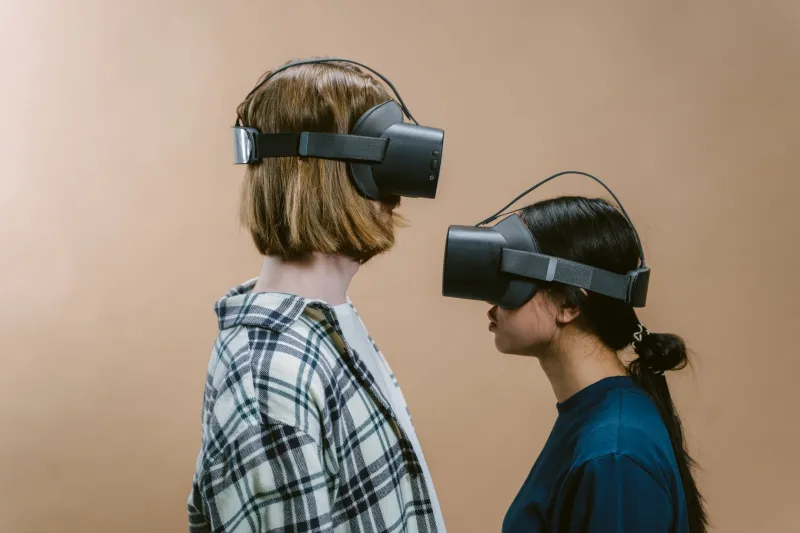
Photo: abandoned virtual reality digital world empty landscape technology, via inkpx.com
Somewhere in a server farm, there's a beautifully rendered virtual concert venue that nobody visits. There's a digital shopping mall with storefronts that haven't seen a customer in over a year. There's a blockchain-backed piece of virtual real estate that sold for six figures and is now worth roughly nothing. Welcome to the metaverse — not the one the hype machine sold you, but the one that actually exists right now.
The past few years have produced an almost comical graveyard of failed virtual world projects. What started as breathless announcements, splashy investor decks, and celebrity-endorsed launches has quietly curdled into one of the more spectacular tech disappointments of the decade. We're talking about billions of dollars — real, actual dollars — funneled into digital spaces that are now effectively ghost towns.
So what happened? And maybe more importantly, who saw this coming?
The Hype Machine Was Running on Empty
The pattern, once you see it, is almost impossible to unsee. A company — sometimes a startup, sometimes a legacy tech giant — announces a bold vision for an immersive virtual world. The press coverage is feverish. Influencers are flown in for demo days. Glossy renders of bustling digital cities circulate on social media. Then the platform launches, and the actual user numbers are... not that.
Decentraland, one of the most high-profile blockchain-based virtual worlds, made headlines in 2022 when reports surfaced suggesting its daily active user count was embarrassingly low relative to its billion-dollar-plus valuation. The platform's defenders argued the metrics were being measured unfairly, but the optics were rough. Meanwhile, Meta — the company that literally renamed itself after this concept — burned through an estimated $36 billion on its Reality Labs division between 2019 and 2023, with its flagship Horizon Worlds platform struggling to retain users even after the company mandated that its own employees spend time there.
Developers who worked on some of these projects describe a culture where the pitch was always more polished than the product. "There was this pressure to show something amazing in the demo, and then figure out the actual experience later," one former developer at a now-shuttered virtual world startup told us, speaking on condition of anonymity. "But 'later' never really came. The funding ran out before the experience ever got good enough to keep people around."
The Economics Nobody Wanted to Talk About
Building a virtual world is expensive. Keeping one alive is even more expensive. And convincing enough people to actually show up — and stay — is the kind of challenge that has humbled companies with far deeper pockets than most metaverse startups ever had.
The core economic problem is what you might call the empty restaurant effect. Nobody wants to eat at a restaurant with no other diners. Virtual worlds live and die by the same social gravity. If you log into a platform and there's nobody there, you're not coming back. Getting past that initial tipping point requires either a massive existing user base or a genuinely compelling reason to be there that doesn't depend on other people. Most of these platforms had neither.
Then there's the hardware problem. The truly immersive metaverse experience — the one where you're actually in a virtual world rather than watching it on a flat screen — still requires a headset that a significant chunk of the US population either can't afford or simply doesn't want strapped to their face for hours at a time. The technology is improving, but it's improving slower than the hype suggested it would.
"Everyone was building for the metaverse of 2030 and trying to sell it in 2022," says one tech investor who asked not to be identified. "The infrastructure wasn't there. The consumer behavior wasn't there. The content wasn't there. You can't just announce a new internet and expect people to show up."
The Platforms That Actually Survived — And Why
Here's the thing though: not every virtual world is a wasteland. Some platforms have quietly built real, thriving communities while the high-profile failures were hogging the headlines.
Roblox, for all its controversies, has tens of millions of daily active users. Fortnite's virtual events — concerts, movie screenings, collaborative experiences — have drawn audiences in the tens of millions. VRChat has cultivated a genuinely dedicated community of users who log in daily to socialize, create, and hang out in ways that feel surprisingly organic.
What do these platforms have in common? They didn't lead with the technology — they led with the experience. They gave people something fun, social, or creative to do, and the immersive tech was in service of that experience rather than the point of it. They also, critically, didn't require users to buy expensive hardware or cryptocurrency just to get in the door.
The failed projects, by contrast, often seemed more interested in the concept of a metaverse than in what people would actually do inside one. They built the architecture before they figured out why anyone would want to live in it.
What the Wreckage Leaves Behind
There's something genuinely melancholy about touring the abandoned corners of these failed virtual worlds — if you can even still access them. Some have been fully shut down, their servers switched off and their digital landscapes erased entirely. Others limp along in maintenance mode, skeletal versions of their original ambitions.
For the people who invested real money into virtual real estate or digital assets on these platforms, the losses aren't abstract. Entire communities formed around some of these worlds, and when the platforms pulled the plug, those communities scattered. The friendships, the creative projects, the shared memories — all of it orphaned in the digital ether.
It's also worth noting that the collapse of these high-profile projects has made it harder for legitimate, thoughtfully built virtual experiences to get funding and attention. When a venture capitalist gets burned by one metaverse investment, they tend to paint the entire category with the same skeptical brush.
The Lesson the Metaverse Hasn't Learned Yet
The honest takeaway from all of this isn't that virtual worlds are doomed — it's that the gold rush mentality almost always destroys more value than it creates. The companies that treated the metaverse as a financial instrument, a marketing buzzword, or a speculative asset class rather than a genuine place to build community got exactly the results they deserved.
The digital frontier is still real. The appetite for immersive, connected virtual experiences is real. But the path there runs through actual human behavior — through what people genuinely find fun, meaningful, and worth their time — not through press releases and investor decks.
The metaverse isn't dead. But a lot of the people who were trying to sell it to you? Their version of it absolutely is.