One Metaverse, A Thousand Different Dreams: The War Over What Virtual Worlds Are Actually For

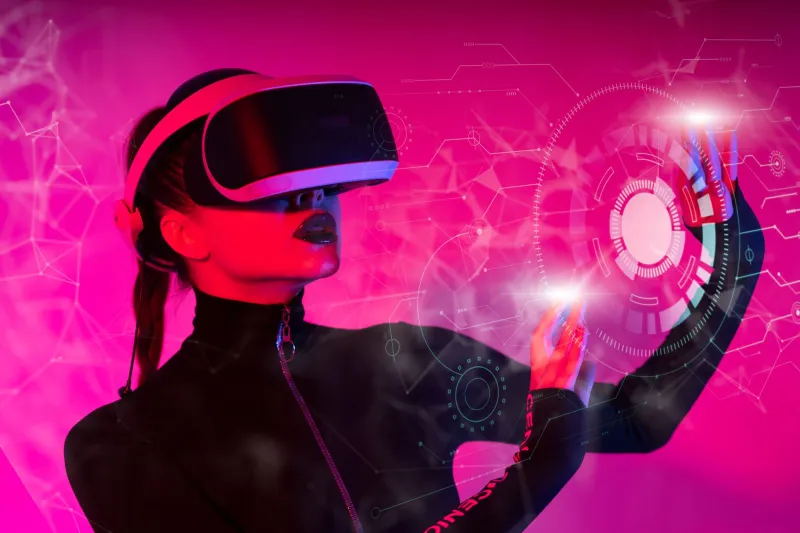
Photo: fragmented virtual reality digital worlds collage multiple screens, via upload.wikimedia.org
Ask ten people what the metaverse is, and you'll get ten completely different answers. A Meta executive will tell you it's the successor to the mobile internet. A Roblox kid in Ohio will shrug and say it's just where they hang out after school. A crypto developer in Austin will pitch you on decentralized land ownership. And a sociology professor will probably tell you it's a mirror held up to every anxiety we have about real life.
They're all kind of right. And that's the problem.
Virtual worlds right now are in the middle of a full-blown identity crisis — one that's been quietly building for years but is finally impossible to ignore. The metaverse doesn't know what it wants to be when it grows up, and the competing factions fighting over its soul are making sure it can't figure that out anytime soon.
The Corporate Vision vs. Everyone Else
When Mark Zuckerberg rebranded Facebook to Meta in 2021 and dropped that infamous presentation featuring his eerily legless avatar, he was essentially planting a flag. The metaverse, in the Big Tech version of events, is a replacement for the internet as we know it — an immersive, persistent layer of digital reality where you work, socialize, shop, and maybe even sleep. It's ambitious, expensive, and deeply, deeply top-down.
But while Meta has burned through billions chasing that vision, something messier and more interesting has been happening on the ground floor. Platforms like VRChat, Rec Room, and NeosVR have been quietly building their own versions of virtual community — ones that look nothing like a corporate campus or a virtual office meeting. These spaces are weird, chaotic, and very much shaped by the people who live in them rather than the platforms that host them.
"The big platforms want to be the metaverse," says one platform architect who's worked on multiple virtual world projects and asked to remain anonymous. "But the communities that actually stick around? They're building something the platforms didn't design and honestly can't fully control."
That tension — between the top-down corporate blueprint and the bottom-up community experiment — is at the heart of why the metaverse feels so fractured right now.
Fragmentation Isn't a Bug. But It Might Still Be a Problem.
Log into Decentraland and you're in a crypto-native world built around digital ownership and blockchain economics. Jump over to Fortnite and you're in a pop-culture playground that's hosted Ariana Grande concerts and Travis Scott performances for millions of simultaneous viewers. Swing by AltspaceVR — well, you can't anymore, because Microsoft shut it down. Each surviving platform operates by its own logic, its own economy, and its own unspoken social contract.
For users, this means constant context-switching. Your avatar in one world means nothing in another. The virtual sneakers you bought on one platform can't travel with you. The friendships you built in a space that shut down are just... gone. There's no interoperability, no shared infrastructure, no common language between these worlds.
Some people argue this is fine — even healthy. The early internet was fragmented too, and it eventually found ways to connect. Different platforms serving different audiences isn't so different from how TV channels or radio stations work. Niche is good. Specificity builds loyalty.
But others point out that the metaverse was specifically sold to us as something unified. The whole pitch was one seamless digital reality, not a hundred disconnected islands. And when the islands can't talk to each other, the dream of a true second layer of human experience starts to look a lot more like just... a bunch of video games.
The People Caught in the Middle
For everyday users, the identity crisis plays out in deeply personal ways.
Take someone like Marcus, a 34-year-old graphic designer in Chicago who's been spending significant time in virtual worlds since the pandemic. He's built friendships in VRChat, attended virtual concerts in Fortnite, and experimented with digital art sales in Decentraland. But he describes the experience as constantly starting over.
"Every platform has its own culture, its own rules, its own economy," he says. "You learn one and then you move to another and it's like moving to a different country. Which can be cool, but it's also exhausting. I don't know which one is actually my home."
That sense of digital homelessness — belonging everywhere and nowhere — is something sociologists are starting to pay real attention to. When a virtual space becomes genuinely meaningful to someone and then pivots, shrinks, or disappears, the psychological impact is real. And when you're not sure which platform is going to stick around, it's hard to invest deeply in any of them.
Is the Identity Crisis Actually a Feature?
Here's the contrarian take, and it's worth sitting with: maybe the metaverse's refusal to coalesce around a single identity is exactly what keeps it alive.
The internet itself never had a unified vision. It was built by academics, then colonized by businesses, then reclaimed by communities, then monetized again, then partially reclaimed again. It's been a constant tug-of-war, and that tension is arguably what made it generative. A metaverse that settled on one identity — say, Meta's corporate utopia — would be stable but probably sterile.
The fact that a furry VRChat community, a blockchain land baron, a Fortnite esports fan, and a virtual therapy patient can all technically claim to be "metaverse users" is strange and chaotic. But it's also kind of the most internet thing imaginable.
"Fragmentation means experimentation," argues one digital sociologist who studies online community formation. "The platforms that survive won't be the ones that won the identity argument. They'll be the ones that built something people actually couldn't leave."
What Comes Next
The metaverse's identity crisis isn't going to resolve itself cleanly or quickly. The corporate giants will keep pushing their visions. The grassroots communities will keep building their own. Some platforms will fold. New ones will emerge. And somewhere in the middle, millions of people will keep logging in, building relationships, spending real money, and making meaning out of pixels.
What the metaverse is going to be is still genuinely up for grabs — and that's both terrifying and kind of thrilling. The digital frontier, as it turns out, is still very much frontier. Nobody's claimed it yet. Not really.
And maybe that's the most honest thing you can say about where we are: the metaverse isn't an answer. It's still a question. A loud, messy, expensive, occasionally beautiful question that a whole lot of people are trying to answer at the same time, in completely different languages, with no shared map.
Welcome to the frontier. It's always been like this.